First Aid at Work, FAW, Jersey
Certified workplace first aid training for higher-risk environments across Jersey. FAA-accredited, Ofqual regulated, and trusted by Jersey businesses.
This course gives learners the practical skills, knowledge, and nationally recognised certification needed to become a workplace first aider. Delivered over three days in Jersey, it meets the latest requirements of the Health and Safety (First Aid) Regulations 1981.
Whether you’re looking to train a single staff member or your whole team, Life Vital Academy delivers trusted, accredited training with a local Jersey focus.
Key course information
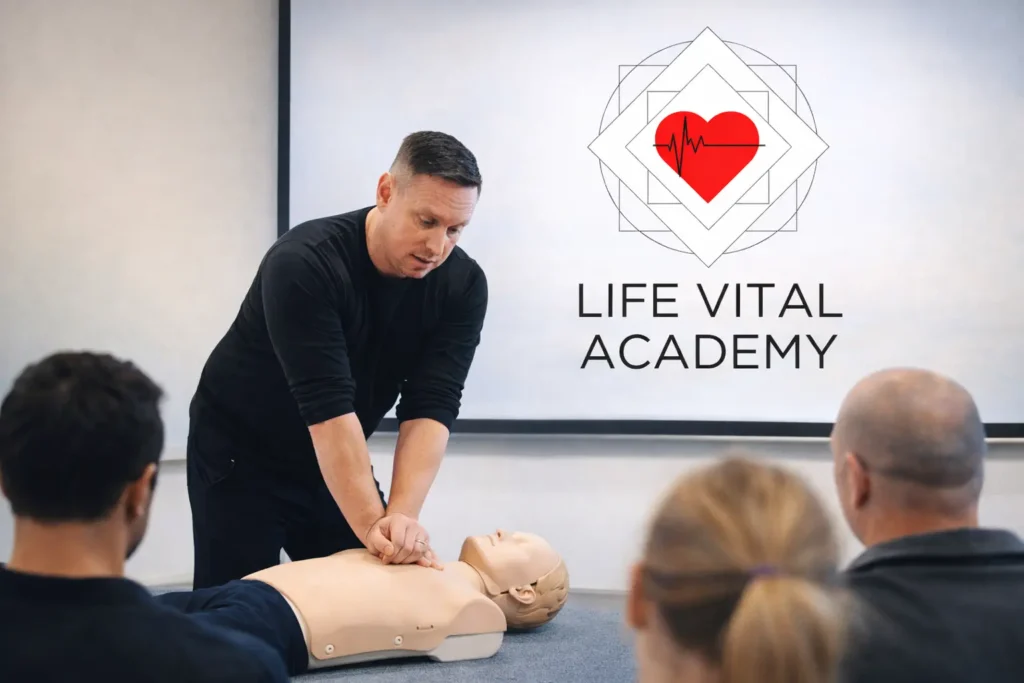
Who is this course for?
This course is designed for people who are appointed as first aiders in medium to high-risk workplaces. It’s suitable for a wide range of industries and roles, including:
- Construction and trades
- Warehousing and logistics
- Education, schools, and colleges
- Manufacturing and engineering
- Hospitality and catering
- Health and social care settings
- Office environments with identified risks
If your workplace has more complex risks or you need full compliance with HSE regulations, this is the correct course to meet those legal duties.e.
What you will learn
Over three days, learners will gain the confidence and capability to deal with a wide range of first aid emergencies. By the end of the course, learners will:
- Understand their responsibilities as a workplace first aider
- Know how to assess incidents and prioritise casualties
- Be able to perform CPR and safely use an AED
- Understand how to treat a wide range of injuries and illnesses
- Be prepared to act quickly and calmly in real-world emergencies
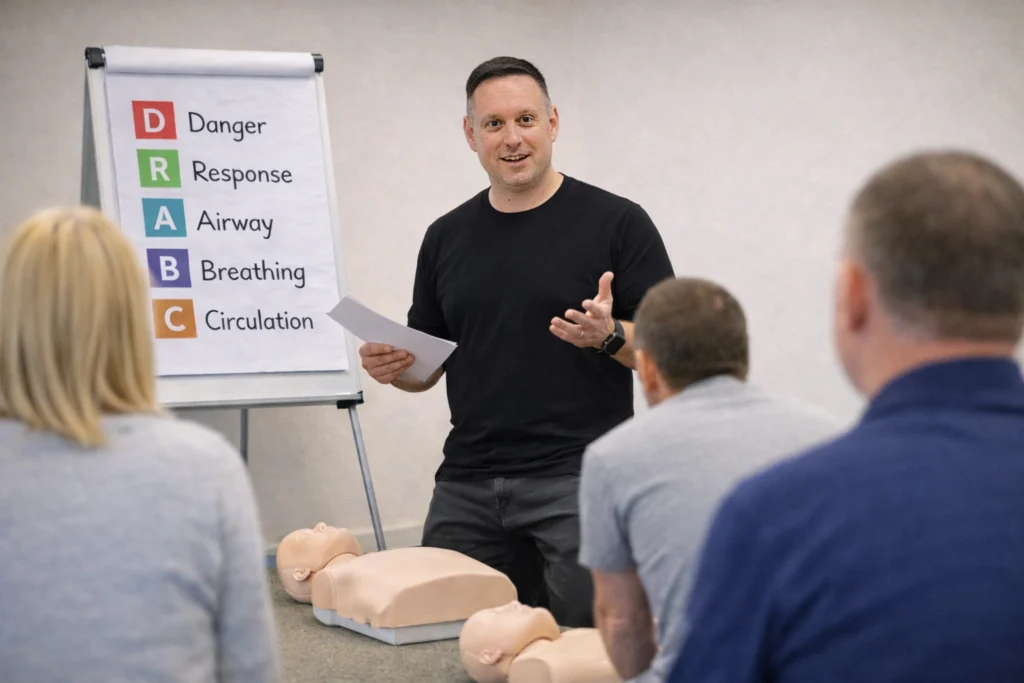
First Aid at Work, course content
The exact balance of topics can be adapted to your workplace, however a typical First Aid at Work course in Jersey includes:
Role and Responsibilities of the First Aider
This section explains the role of the workplace first aider, including personal safety, acting within the limits of training, communicating effectively with casualties, colleagues and emergency services, and understanding the importance of accurate record keeping.
Assessing an Incident
Learn how to safely approach an incident, identify potential hazards, assess the scene, and decide on appropriate action. This includes carrying out a primary survey and understanding when and how to call for professional help.
Managing an Unresponsive Casualty
Covers how to assess consciousness, open and maintain the airway, check breathing, place a casualty into the recovery position, and continue monitoring until help arrives.
Cardiopulmonary Resuscitation (CPR)
Practical training in adult CPR, including chest compressions and rescue breaths, delivered in line with current Resuscitation Council UK guidelines.
Use of an Automated External Defibrillator (AED)
Learn how to safely and confidently use an AED, including pad placement, following voice prompts, and understanding safety considerations when delivering a shock.
Choking
Recognising the signs of choking and providing effective first aid using back blows and abdominal thrusts for adults.
Seizures and Epilepsy
Understanding different types of seizures, how to protect the casualty from injury, provide reassurance, and recognise when emergency assistance is required.
Shock
Learn to recognise the signs and symptoms of shock, provide appropriate first aid, and support the casualty until professional help arrives.
Wounds and Bleeding
Managing minor and severe bleeding, using dressings correctly, controlling bleeding, and dealing with embedded objects safely.
Burns and Scalds
First aid treatment for burns and scalds, including cooling techniques, covering the injury, and recognising when further medical treatment is required.
Fractures, Dislocations, Sprains and Strains
Identifying and providing initial care for suspected fractures, dislocations, sprains and strains, including immobilisation and casualty support.
Head and Spinal Injuries
Recognising and responding to suspected head and spinal injuries, maintaining spinal alignment, and monitoring the casualty while awaiting emergency services.
Eye Injuries
Providing first aid for eye injuries caused by foreign objects, chemicals, or trauma, including irrigation and safe covering techniques.
Heart Attack and Angina
Recognising the symptoms of a heart attack or angina and providing calm, effective first aid support, including helping with aspirin where appropriate.
Stroke
Learning to identify the signs of stroke using the FAST approach and providing reassurance and appropriate support until emergency help arrives.
Diabetes
Understanding how to recognise and respond to diabetic emergencies, including low and high blood sugar situations.
Asthma
Recognising asthma attacks, assisting with inhaler use, and monitoring the casualty until their condition improves or help arrives.
Anaphylaxis and Severe Allergic Reactions
Recognising the signs of severe allergic reactions and providing first aid, including assisting with the use of adrenaline auto injectors.
Fainting and Minor Illnesses
Managing fainting and common minor illnesses, providing reassurance, and knowing when further medical advice is needed.
Poisoning
Understanding how poisoning can occur, recognising symptoms, and providing appropriate first aid while awaiting professional advice or emergency services.
Infection Control and Hygiene
Best practice for infection prevention, including hand hygiene, use of personal protective equipment, and safe disposal of contaminated waste.
Accident Reporting and Record Keeping
Understanding the importance of accurate accident records, how to complete report forms correctly, and the legal responsibilities around documentation.
Content is aligned with the nationally recognised First Aid at Work specification, delivered through NUCO Training and regulated by FAA, giving you confidence that the qualification is robust and up to date.
Assessment and Certification
Assessment is carried out by the trainer through observation and practical tasks during the course. There is no written test.
Learners who successfully complete the training will be awarded the FAA Level 3 Award in First Aid at Work (RQF). This is valid for three years and recognised across Jersey and the UK.
The awarding body is First Aid Awards Ltd, regulated by Ofqual and SQA Accreditation, and fully compliant with the Health and Safety Executive (HSE) guidelines.
Course Format And Pricing
Our First Aid at Work courses are delivered in person in Jersey, with a focus on realistic, hands on learning.
- On site training at your workplace for groups, subject to a suitable training room
- Open courses for individuals or smaller numbers, subject to scheduled dates
Pricing:
- From £195 per person
All training equipment, manikins and materials are provided. Maximum course number will not exceed 12 people.
Why choose Life Vital Academy for First Aid at Work
Clinically Led Training
Courses are delivered by an experienced Intensive Care nurse with over 20 years of front line emergency and acute care experience
Accredited Training
NUCO Training approved instructor delivering FAA Level 3 Award in First Aid at Work
Local to Jersey
We understand local workplaces, services and community settings, and can tailor examples and scenarios accordingly
Small groups
Small and supportive groups allowing plenty of time to ask questions and practise skills until you feel confident, not rushed
Frequently asked questions, First Aid at Work
Yes. This course is awarded by First Aid Awards Ltd and regulated by Ofqual, meaning it is recognised across the Channel Islands and the UK. It meets all requirements set out by the HSE.
Yes. We regularly deliver on-site training for businesses and organisations across Jersey. All we need is a suitable training space.
No prior knowledge is needed. This course is suitable for beginners and those renewing their training after three years.
The Emergency First Aid course is a 1-day option suitable for low-risk workplaces. This 3-day course is required for higher-risk environments or where your workplace first aid needs are more complex.
Comfortable clothing and footwear are recommended, as you will be kneeling, bending and practising skills on the floor.
In line with NUCO and FAA guidance, the usual maximum is 12 learners per instructor, to ensure everyone has enough practice.
Ready to book First Aid at Work in Jersey
If you are ready to book your First Aid at Work course, or you would like some help deciding whether Emergency First Aid at Work or First Aid at Work is more appropriate for your setting, we are happy to help.